





What To Look For When Auditing Your 2026 Floor Cleaning Contract
At a Glance
Cleaning contract performance depends less on scope and more on whether equipment, maintenance and workflows can meet your operational demands. When you’re auditing, you should assess machine capability, condition and servicing, as well as labour. In many cases, inefficiencies stem from mismatched or poorly maintained equipment rather than staffing levels or contract structure.
Call us now to discuss your requirements or schedule a consultation.
Why Cleaning Contracts Break Down in Real Operations
Most cleaning contracts don’t fail on paper, but they fail on the floor. You might have the right headcount, the perfect schedule and a supplier that ticks every box. Even then, results may feel inconsistent, with floors left unclean and slipping standards. Your costs stay steady contractually, but performance does not and that distinction is exactly why more facilities teams are questioning, “What should a cleaning contract include in 2026?”
To find the answer, you’ll usually need to look beyond the scope of work and analyse the entire setup, as the issue is rarely the contract itself. Most of the time, it’s the equipment that no longer matches the scale of the site, the maintenance that happens too late and the outdated processes that rely more on effort than on efficiency.
So, when you’re asking yourself how to audit a cleaning contract, it makes sense to look at the paperwork, but more importantly, understand how it will be applied in the reality of operations. That means considering things like:
- Are machines fit for purpose?
- Is the performance consistent across shifts?
- Is the setup actually capable of meeting the agreed commercial cleaning contract standards?
Make sure to look at the entire cleaning setup, including the commercial cleaning equipment and other workflows, as this is exactly where inefficiencies start to show.
What Your Cleaning Setup Really Includes
What does a cleaning contract look like in reality and what does it include? It often centres on work hours, staffing levels and cleaning frequency, which reflect only part of the operation.
A complete cleaning setup is defined by the equipment in use and how it performs on-site. This includes things like:
1. The types of machines deployed, such as ride-on or pedestrian scrubber-dryers and sweepers
2. Whether those machines match the size and layout of the facility
3. The ability to clean and dry the floor in a single pass to maintain safety and uptime
4. The availability of servicing for these machines, including who is responsible if a part fails mid-operation
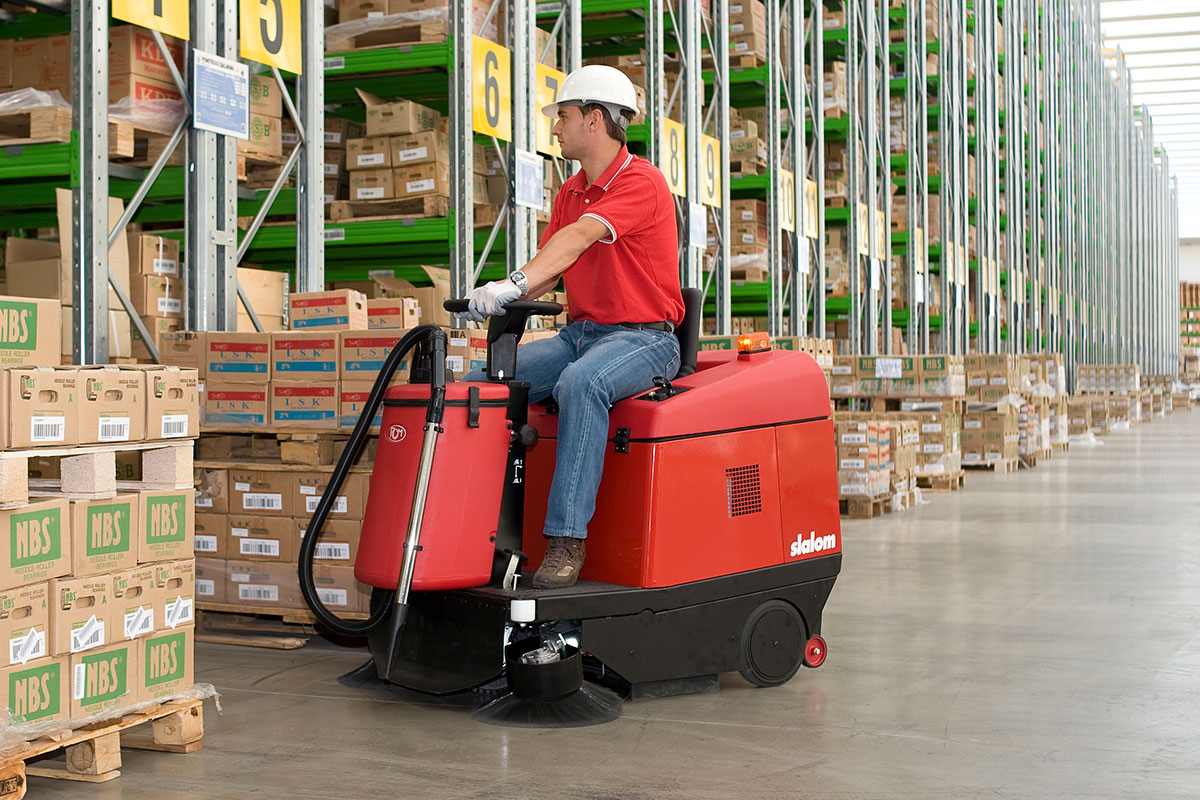
Commercial floor-cleaning machines are designed to remove grease and debris while leaving the floor dry in a single pass, improving both efficiency and safety in high-traffic environments.
These machines are crucial for efficiency and should be a part of your setup, as they directly affect output. For example, larger ride-on scrubber dryers are built to clean wide areas swiftly, with some models capable of covering thousands of square metres per hour, while compact machines are better suited to tight spaces or obstructed layouts.
If the equipment doesn’t match the site, your cleaning time will increase and the quality of the results will vary. Plus, more manual intervention is required, which usually also increases your costs.
Are Costs Driven by Equipment or Labour
If you’re still asking the question, “How much does a cleaning contract cost?”, the answer mostly points to labour. Labour costs across the UK cleaning sector have risen steadily, with one recent report stating that labour accounts for nearly 70% of total cleaning spend. It might look that way, but labour isn’t usually the real issue behind the cost hike.
In many cases, labour costs reflect the equipment being used or the lack of equipment altogether. For example, if a warehouse floor takes four hours to clean, the problem is not simply a staffing issue but a matter of process and cleaning setup.
Investing in a ride-on scrubber with a larger tank capacity and a wider cleaning path can significantly reduce that time. It also shifts the overall cost structure by improving cleaning speed, reducing labour dependence, minimising downtime and boosting the efficiency of your cleaning operation.
Reviewing Equipment Performance and Standards
Your cleaning equipment rarely receives the attention it deserves during contract reviews. When you can’t tell what a cleaning contract should include, review the machines you’re currently using and see if they’re mentioned in the contract.
Check for specifications such as cleaning width, coverage per hour, water tank capacity and refill frequency, battery runtime, and fuel efficiency. You should also make sure the commercial cleaning equipment specified in the contract is suitable for your floor type or space.
If those specifications aren’t aligned with your facility size, performance will always lag behind expectations. So, deal with contractors that offer machines from well-known manufacturers like RCM, Iseki, Honda and Stiga. These top-end machines are designed for high-output environments such as warehouses and manufacturing sites.
How Equipment Condition Affects Results
Even the right machine can underperform if it’s not maintained properly. Broken parts, worn brushes, reduced suction or inconsistent water flow can all lead to patchy cleaning. While these issues can be subtle at first, they can gradually lead to safety risks and compliance issues.
During your audit, inspect brush wear and replacement cycles, check whether vacuum performance is mentioned alongside drying results and look for consistency through different operators. If the result varies from shift to shift, the issue may not be the cleaning team but the condition of the equipment they rely on.
The Impact of Maintenance on Cleaning Outcomes
This is where many contracts break, as commercial cleaning contract standards don’t include clear equipment maintenance schedules. Several contractors treat servicing and maintenance as reactive measures and don’t plan ahead, which leads to everything from downtime and delays to rushed cleaning and compliance risks.
For contractors, it’s important to work with commercial cleaning equipment suppliers that offer after-sales support and prioritise service, parts availability and ongoing machine performance. It matters to facility managers as well, since a well-maintained machine delivers consistent performance. So, if your current contract doesn’t clearly address maintenance, that’s a gap worth noting.
Identifying Gaps in Your Cleaning Setup
When you step back and assess what a cleaning contract should include, the goal is to identify gaps.
Common issues include overreliance on manual cleaning in large areas and the continued use of outdated machines that no longer meet facility demands. Also, if there’s no structured maintenance plan and no clear performance metrics for the equipment, you should treat it as a red flag.
These gaps seem smaller and stay in the background, but they ultimately shape daily outcomes.
When to Upgrade Instead of Switching Contractors
The uncomfortable truth is that changing contractors doesn’t always solve the problem. If you’ve identified the underlying issue as equipment or workflow, you’ll face the same limitations even with a new contractor.
In a few cases, upgrading your machines or improving maintenance support delivers better results than switching providers, as it’s less disruptive and more cost-effective.
Euromec supplies industrial cleaning machines in the UK, serving facilities in the municipal and agricultural sectors with equipment built for consistent, high-output performance. We work with facilities to assess existing setups and recommend upgrades, which may involve replacing an ageing scrubber or introducing a more efficient sweeper. Get in touch to find out more.
Aligning Cleaning with Smarter Equipment Use
A well-structured cleaning setup balances labour and machinery, which means you still need skilled operators, but their role shifts from manual effort to machine-led efficiency.
Cleaning output doesn’t always need more time, as it comes down to how much of the area can be covered within the same shift. Machine capability plays a direct role here: for example, larger tanks reduce the frequency with which operators need to stop to refill, while wider cleaning paths mean fewer passes through the same room. In the same way, consistent servicing keeps machines running without interruption.
Taken together, this improves the amount of work completed within a fixed timeframe, without increasing labour input.
Speak to Euromec About Equipment Upgrades and After-Sales Support
If your audit highlights gaps in performance or equipment capability, the next step is to address them with the right support in place.
Euromec works directly with facilities managers, operations teams and procurement leads to assess cleaning setups and recommend machines that match the site’s scale and demands. This includes industrial scrubber dryers and sweepers designed for warehouses, manufacturing units and public-sector environments where consistency and uptime are crucial.
As an authorised distributor for brands such as RCM, Iseki, Honda and Stiga, Euromec supplies equipment built for continuous use and measurable output. You can explore our available options and the product category, where the machine types, specifications, and use cases are clearly defined.
What sets us apart is our focus on after-sales support through timely servicing, parts availability and ongoing maintenance. All of this is built into the offerings so that machines continue to perform as expected long after installations. This can be critical when your cleaning contract depends on consistent delivery across shifts.
If you wish to explore our full range of scrubber dryers to find a machine that fits your operational needs, connect with us today.

Nikki
Director
Nicola has worked in the cleaning machine industry for 18 years across both Sales and Service. Nicola has an comprehensive knowledge of a range of cleaning machine makes and models, and has been instrumental in the sale and servicing of machines across a vast range of applications.