





Why Hopper Capacity Matters as Much as Cleaning Width
At a Glance
Hopper capacity directly affects how long a sweeper can collect debris before emptying, influencing interruptions and shift time. Cleaning width determines coverage per pass, but you must consider it alongside hopper size, debris volume, site layout, manoeuvrability and power source. The right specification depends on the facility and its cleaning demands.
To explore this further, call Euromec and discuss your facility’s requirements or email us your questions today.
Why Cleaning Width Gets All the Attention
When comparing industrial sweepers, people often notice cleaning width first. Cleaning width is easy to compare because it gives one clear number. It tells you how much floor the machine can cover in one pass, so it naturally becomes a headline specification.
A machine that sweeps 1,900mm sounds like it should cover more ground than one working at 1,250mm. That can be true, but hopper capacity can also influence how much useful work the machine completes during a shift.
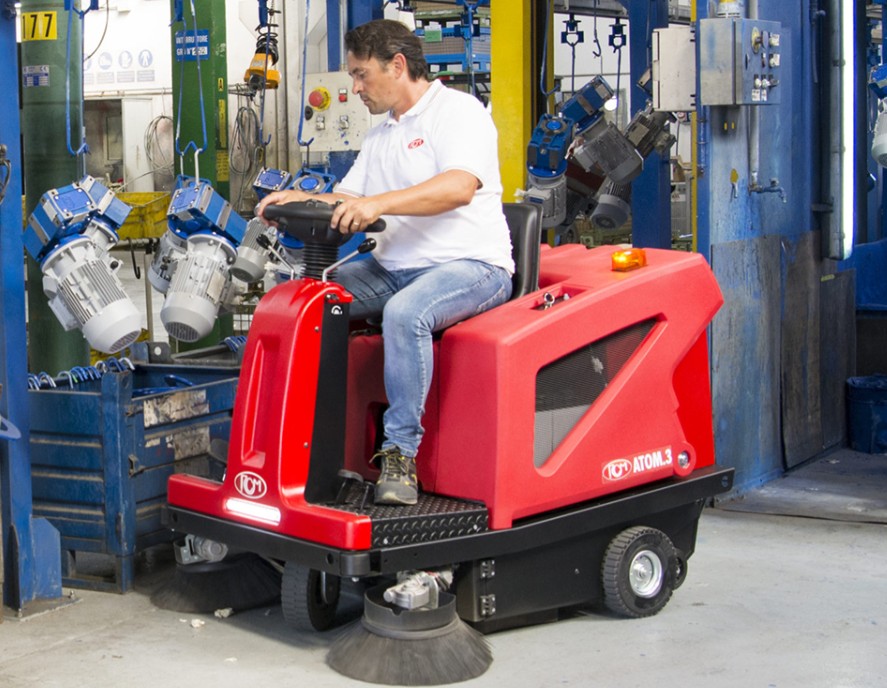
For example, take two RCM machines from Euromec. The first is Atom.3, with a cleaning width of up to 1,250mm using two side brushes and a 95-litre hopper, while the Mille reaches 1,550mm with one side brush and up to 1,900mm with two side brushes and a 300-litre hopper. These specifications show how cleaning width and hopper capacity can vary between machines. When comparing models, facilities teams should consider both, along with the amount of debris collected and how often emptying is required during a shift.
What Hopper Capacity Actually Determines During a Shift
Hopper capacity determines how much material the machine can carry between emptying cycles. That makes it particularly relevant on sites where sweeping produces a steady stream of dust, leaves, packaging waste or other loose debris.
In a warehouse yard after a busy shift, where forklift traffic can leave grit and packaging debris across large areas, a machine with a wider brush path can cover the area quickly. However, if its hopper capacity is limited, the operator still has to interrupt the job.
Understanding how street sweepers work is key because cleaning isn’t simply about moving a brush. Debris must be collected, filtered and stored effectively, so how often to empty a street sweeper hopper also matters, as it becomes part of the machine’s working cycle. Euromec supplies both dedicated street sweepers, such as the City Ranger 2260 and RCM ride-on floor sweepers designed for cleaning larger indoor and outdoor surfaces. These machines differ in their intended applications and specifications.
The Supra, for instance, has a 1,450mm cleaning width and a 120- or 150-litre hopper, depending on the configuration chosen. Only the 150-litre version has hydraulic emptying, giving the operator a practical way to remove collected material when the hopper is full.
How Hopper Size Affects Uptime, Labour and Emptying Frequency
Hopper capacity matters because each emptying cycle can interrupt the cleaning route. A bigger street sweeper hopper lets the operator work longer before emptying. This is especially useful when a sweeper works for long periods or handles a high volume of debris.
Each cycle means the operator must stop, travel to the disposal site, empty the collected material and return to the area being cleaned. The time involved depends on the site layout, debris levels and disposal arrangements.
This is why asking how often to empty a street sweeper hopper is more useful than looking at hopper volume in isolation. There is no universal emptying frequency because a 300-litre hopper could fill quickly on a debris-heavy site and last much longer where less material is collected.
The practical questions are how much material your team normally collects during a cleaning run and how far the machine needs to travel to dispose of it. This gives you a better basis for comparing machines than cleaning width alone.
Balancing Cleaning Width and Hopper Capacity for Your Site
Cleaning width and hopper capacity therefore need to be considered together. The right specification depends on the site, because a wider machine can reduce the number of passes required across an open warehouse floor or extensive yard. Sufficient hopper capacity can support longer cleaning runs between disposal points.
Machine size matters too. A large sweeper may work well across an open yard like the Egholm City Ranger 2260, which has a 500-litre hopper, hydraulic emptying and a sweeping width of 1,200mm to 2,100mm, but can be harder to manoeuvre around vehicles, racking, loading areas and other obstructions.
In more congested spaces, a compact machine such as the Atom.3 can be a better option, especially where access and manoeuvrability matter as much as sweeping performance.
Matching Hopper Capacity to Your Facility’s Debris Volume
Once you’ve considered the site’s physical size and cleaning requirements, the next step is to look at the type and volume of debris the machine will collect. The best way to assess hopper capacity is to start with the material your team actually needs to collect.
A manufacturing site may deal with fine dust and production debris. A warehouse may have packing waste and material brought in by vehicle traffic. An outdoor commercial area may produce leaves, grit, dust and general litter. These conditions create different demands on the street sweeper hopper.
This is also where understanding how street sweepers work helps avoid mistakes. Do not select a machine based on sweeping width alone. Collection volume, dust filtration, brush configurations, disposal arrangements and the type of surface being cleaned all affect how effectively it can handle the site.
The site environment can also influence the power source you need. Electric sweepers can be useful where lower noise and zero tailpipe emissions are a priority, particularly around pedestrian areas or enclosed spaces. With different machine sizes, configurations and power options available, Euromec supplies RCM sweepers such as the Supra, Atom.3 ESA, Boxer Plus and Mille E, alongside petrol, diesel and other power options across our wider sweeper range. and Powerflex Ride-on Street Sweepers, from pedestrian machines to larger ride-on models.
Need Help Choosing the Right Sweeper? Contact Euromec
Choosing the right sweeper involves more than comparing cleaning width and hopper capacity. Euromec can help you assess your site, cleaning requirements and machine specifications before you choose your equipment. We also provide after-sales support, servicing, repairs and access to manufacturer-produced parts across our cleaning equipment range.
If you are reviewing your current sweeper or planning new equipment, explore Euromec’s ride-on sweeper range or contact our experts to discuss your requirements. Call us or send an enquiry to enquiries@euromec.co.uk today.

